
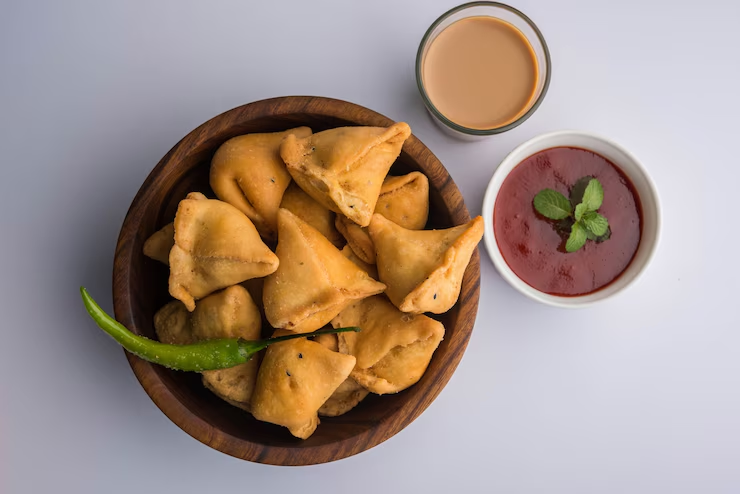
One of the most popular South Asian appetizers, samosas have become well-known worldwide for its delicious interior and crispy outside. Enjoyed at restaurants, family get-togethers, or street vendors, samosas are valued as a delicious treat. But when it comes to nutrition and health, a lot of people are curious in how many calories one samosa contains and how it fits into a balanced diet. This article goes into great detail about how many calories a samosa has, what factors affect those calories, how they are broken down nutritionally, how they affect health, and how to eat samosas without sacrificing your health.
A Samosa: What Is It?
A samosa is a triangle or cone-shaped pastry that is usually filled with lentils, peas, spicy potatoes, or occasionally meat. It is a tasty and decadent food that is typically deep-fried till golden and crispy. Maida, or refined wheat flour, is used to make the traditional samosa dough, which adds to its distinctive texture.
One Samosa’s Average Caloric Content
A samosa’s calorie content varies greatly based on its size, composition, and cooking technique. A medium-sized vegetable samosa, weighing around 100 grams, has between 130 and 150 calories on average. Depending on the dough thickness, oil absorption, and filling composition, this estimate may go up or down.
Elements Affecting Samosa Calories
Weight and Size: Naturally, larger samosas include more calories. Samosas from street vendors can weigh anywhere from fifty grams to more than 150 grams.
Filling Ingredients: Although potato-based fillings are popular, samosas with cheese, almonds, or meat (lamb or chicken) typically have greater calorie contents.
Cooking Method: Oil is absorbed by deep-fried samosas, which raises their calorie content. Versions that are baked or air-fried have a lot fewer calories.
Oil Type and Quantity: Calorie density is influenced by the type of oil used (vegetable, mustard, or ghee) and the amount of oil absorbed by the samosa.
Dough Composition: While substituting whole wheat flour for refined flour may change the nutritional content, it won’t significantly save calories.
An Analysis of the Calories in a Classic Vegetable Samosa
Typically, a typical samosa is composed of protein, lipids, and carbohydrates. An approximate breakdown for a medium vegetable samosa is as follows:
140 kcal
18–20 grammes of carbohydrates
7–9 grams of fat
2–3 grams of protein
2 grams of fiber
Carbohydrates (dough and potatoes) and fats (frying oil) account for most calories.
How Do You Meet Your Daily Calorie Needs with a Samosa?
Depending on age, sex, and degree of activity, the average adult needs 1,800–2,500 calories per day. About 140 calories are included in one samosa, which is equivalent to:
7–8% of a daily diet of 2,000 calories.
This percentage might not seem like much, but when eating several samosas or combining them with other high-calorie foods, it can rapidly mount up.
Value of Nutrition Beyond Calories
Although they are high in energy, samosas are low in vital elements. Saturated fats and empty calories are added by the refined flour dough and deep-frying, while the potato filling provides some potassium, vitamin C, and carbs. Unless meat or lentils are added, there is very little protein and a comparatively poor fiber content.
Effects of Regular Samosa Consumption on Health
While eating samosas sometimes is unlikely to be harmful to your health, doing so frequently, especially when they’re deep-fried, can have negative effects:
Weight Gain: Eating fried snacks high in calories on a regular basis might lead to calorie excess and weight gain.
Cardiovascular Risk: Eating samosas cooked with trans or saturated fats can increase LDL cholesterol, which raises the risk of heart disease.
Impact on Blood Sugar: Starchy potato filling and refined flour might raise blood sugar levels, which is problematic for diabetics.
Digestive Health: Due to their low fiber content, samosas are less good for digestion and, if eaten in excess, can cause constipation.
Healthy Substitutes for Conventional Samosa
Think about healthier options if you want to eat samosas guilt-free:
Baked Samosas: Baking drastically cuts calories by reducing the oil content by 70–80%.
Air Fryer Samosas: Air frying uses less oil to get crispiness.
Whole Wheat Dough: Making use of whole wheat flour boosts nutrition and fiber content.
Filling Variations: For an added nutritional boost, add veggies like spinach, peas, carrots, or protein-rich lentils.
Smaller Portions: To reduce calorie intake, choose tiny samosas.
Advice on How to Eat Samosas in a Balanced Diet
The Key Is Moderation: Don’t eat samosas every day; save them for special occasions.
Pair with Nutritious Sides: To balance the meal, serve samosas with soups, yogurt-based dips, or fresh salads.
Keep an eye on the accompaniments: Steer clear of creamy sauces or sugary chutneys that increase calorie intake.
Keep in mind Portion Size: Limit yourself to one or two samosas and pair them with foods high in nutrients.
Select Cooking Techniques Sensibly: When feasible, choose baked or air-fried foods.
Samosas’ Cultural and Social Significance
In many South Asian nations, samosas are culturally significant in addition to being a nutritious food. They are closely associated with social gatherings, street food culture, and festivities. Knowing how many calories they contain doesn’t make them less valuable; rather, it gives customers the power to make wise decisions.
How to Prepare Homemade Low-Calorie Samosas
Control over the ingredients and cooking techniques is possible while making samosas at home:
Make use of multigrain or whole wheat flour.
Add a mixture of peas, carrots, cooked potatoes, and seasonings.
Instead of deep-frying, bake or use a small amount of oil for shallow-frying.
For healthier outcomes, use air fryers or non-stick cookware.
Samosa’s Function in Weight Loss Programs
Even though samosas are typically seen as decadent, they can be thoughtfully included in a diet that restricts calories. Negative effects can be avoided by keeping track of calories and balancing intake with exercise.
Particular Diets and Samosa
Vegan & Vegetarian: The majority of samosas are inherently vegetarian, however make sure they don’t contain any animal fats.
Gluten-Free: While regular samosa dough contains gluten, substitute flours can be used to make gluten-free variants.
Diabetic Diets: Blood sugar control requires portion control and healthier cooking techniques.
Comparing Other Well-Known Snacks to Samosas
Samosas have about the same number of calories as other fried snacks like pakoras or kachoris, but because of the potato filling, they are frequently thought to be more substantial. Nonetheless, there are some healthy substitutes, such as roasted almonds or baked nibbles.
Global Adaptations and Samosa
Local ingredients have been used to modify samosas in different nations; some have meat fillings, while others contain cheese or lentils, which has an impact on the calorie level. It’s critical to consider these variations when calculating caloric intake.
Conclusion: Savoring Samosas in a Responsible Manner
Although many people still enjoy samosas, being aware of their calorie and nutritional value helps them make better decisions. It is possible to balance enjoyment with health, whether by occasionally indulging or by looking for healthier dishes. You can continue eating samosas guilt-free if you are aware of how many calories they contain and think about healthier ways to prepare them.
In conclusion, 130 to 150 calories, mostly from fats and carbohydrates, make up a medium-sized samosa. You may still enjoy this traditional snack while keeping a healthy lifestyle and balanced diet by eating them in moderation and choosing baked or air-fried varieties with wholesome ingredients.